


Let patients decide at home, not in the chair.
- Full plan, questions, and pricing - all in one place
- Patients comment, ask questions, accept, or decline
- Asynchronous - patients engage on their schedule
Plandentic is in beta with a select group of clinics. Contact us for access
Real plans from the app: the cover, the pages, the patient's phone, the PDF.
View example plans Build visual, branded proposals in minutes.
Sent digitally, tracked from viewed to accepted.
No credit card required
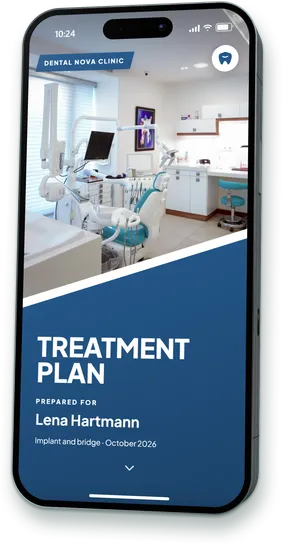
Your new smile
starts here.
A treatment plan for Lena Hartmann
Dental Nova Clinic
October 2026
Lena, I put this plan together myself after Tuesday's visit. It is in the order I would want for my own family: what protects the tooth first, what can wait, and what is optional.
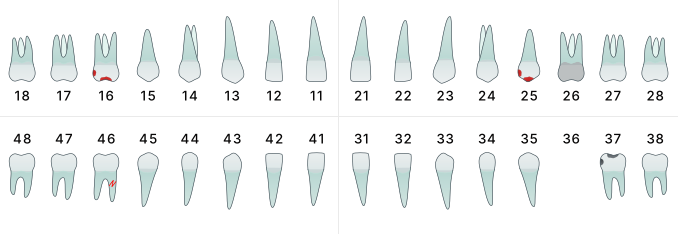
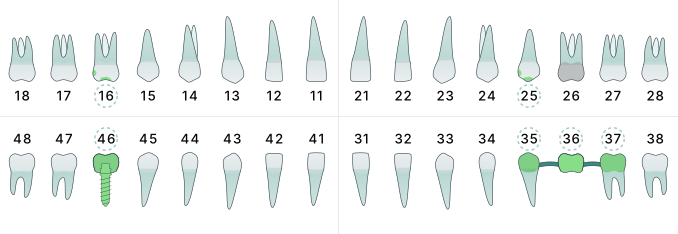
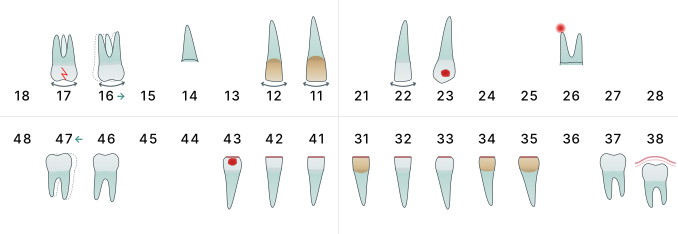
The lower right molar, tooth 46, is cracked below the gum line and cannot be saved. The gap at 36 has been open for years, and 16 and 25 show early decay.
Three phases over about four months.
Not going ahead? Decline plan
Your logo, colour and photo, with the patient's name on it.
Accept or decline, in the plan itself. The moment she taps, you see it at the clinic.
Works alongside your clinic software
From blank to a branded treatment plan
From sent to patient choice - explicitly
Plans used to look like invoices, so patients compared prices. A Plandentic plan explains every option, so patients see your expertise and trust your recommendation.
The following treatment plan is based on the clinical evaluation and x-rays taken on 14/10/2026. This plan is a recommended sequence of care to restore your oral health.
| Procedure | Tooth | Code | Description | Fee |
|---|---|---|---|---|
| Phase 1: oral surgery and implants | ||||
| 1.1 | 11 12 16 17 22 23 | D7140 | Extraction, erupted tooth | €420.00 |
| 1.2 | 14 26 | D7250 | Removal of residual tooth roots | €360.00 |
| 1.3 | 47 | D7140 | Extraction, erupted tooth | €70.00 |
| 1.4 | 38 | D7230 | Removal of impacted tooth, partially bony | €180.00 |
| 1.5 | 12 22 | D6010 | Surgical placement of implant body, endosteal | €1,700.00 |
| 1.6 | 15 25 | D6010 | Surgical placement of implant body, endosteal | €1,900.00 |
| 1.7 | 12 15 22 25 | D6056 | Prefabricated abutment, includes placement | €600.00 |
| Phase 2: fixed prosthodontic, mandibular | ||||
| 2.1 | 37-46 | D6740 | Retainer crown, porcelain/ceramic | €4,000.00 |
| 2.2 | 36 44 45 | D6245 | Pontic, porcelain/ceramic | €1,200.00 |
| Phase 3: implant prosthodontic, maxillary | ||||
| 3.1 | 16-26 | D6114 | Implant/abutment supported fixed denture, maxillary | €9,600.00 |
I have received and reviewed this treatment plan and had the opportunity to ask questions.

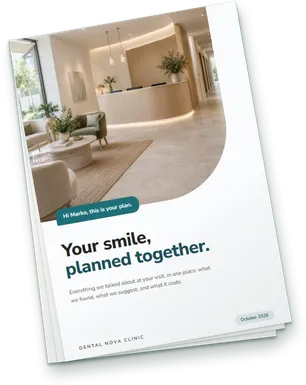
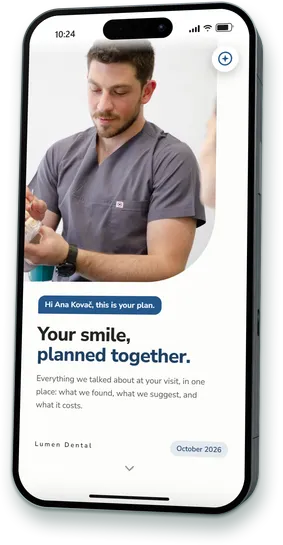
Hi Marko Delos, this is your plan.
Your smile,
planned together.
Everything we talked about at your visit, in one place: what we found, what we suggest, and what it costs.
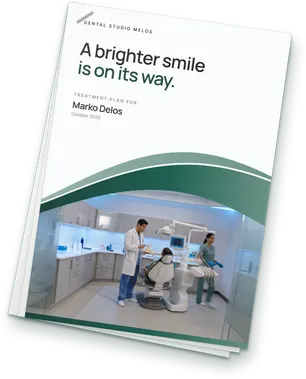
Dental Studio Melos
October 2026
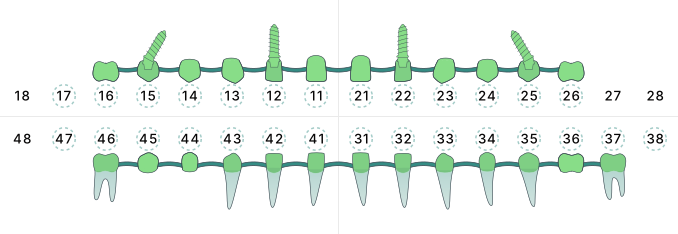
Marko, this is everything we went through on Monday. Your upper teeth can no longer hold, so they come out on one day and four implants go in. Your lower teeth stay, joined under one bridge.
Marko, here is what we propose: one fixed bridge on four implants for your upper teeth, and one bridge to join and protect your lower teeth. The teeth that cannot be saved come out first.
Three phases over about four months.
 1 2 3
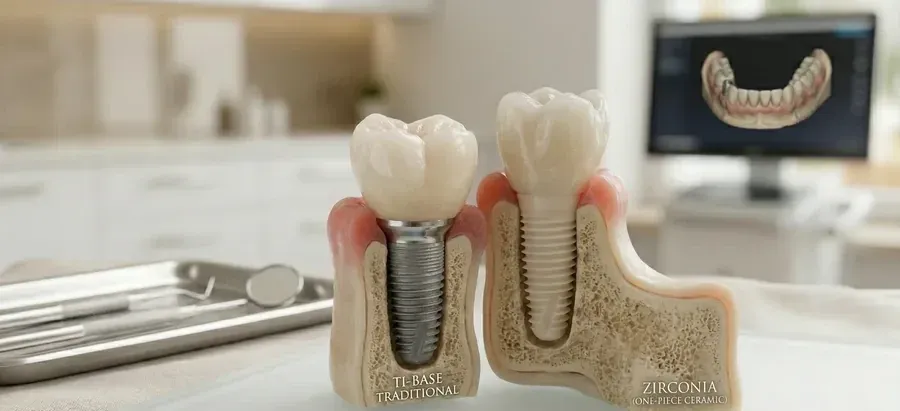
Dental implants are the most well-established method for permanently replacing a missing tooth, with millions placed worldwide each year. A small titanium post is positioned in the jawbone, where it naturally fuses with the bone over several months - a process called osseointegration.
See more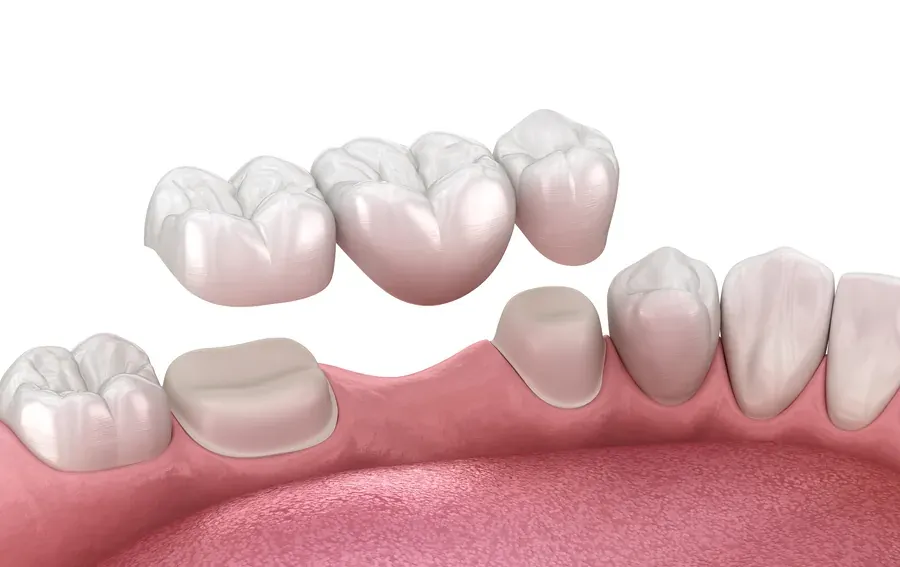 1 2 3
A dental bridge replaces one or more missing teeth by anchoring securely to neighbouring teeth or implants. It is a well-established, fixed solution.
See moreNot going ahead? Decline plan
Marko, here is what we propose: one fixed bridge on four implants for your upper teeth, and one bridge to join and protect your lower teeth. The teeth that cannot be saved come out first.
Three phases over about four months.
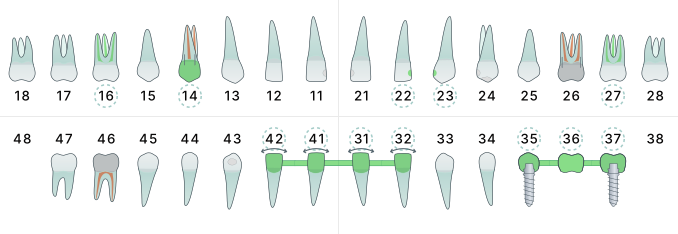
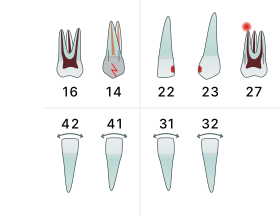
Mark findings and click treatments on the tooth chart. Each click lands as a priced line, and the patient's plan composes itself as you go.
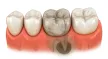 Periapical lesion
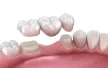 Bridge
The dentist and the treatment coordinator work in it all day;
the rest of the team opens it for their part.
It is a dental treatment planning platform where a plan is made and followed to the patient's yes.
1 dentist, 1 to 4 staff. The owner is the dentist, the presenter and the pricer. The assistant is the universal second person and often also the front desk.
2 to 5 dentists, 5 to 15 staff. The first structural change is a manager who is not a dentist. The coordinator is still a hat, usually on the manager or a senior assistant.
5 to 15 clinicians, up to 50 staff. Roles specialise: dedicated treatment coordinators, a front office lead, billing as its own desk, a clinical lead per department.
Multi-site groups run two ladders: an operations line and a clinical line. Each site keeps the small-clinic shape under a practice manager.
The same person as the dentist see analytics on stalled plans and manage the pricebook, staff and branding
Principal dentist or partners see analytics on stalled plans and manage the pricebook, staff and branding
Owners and a medical director see analytics on stalled plans and manage the pricebook, staff and branding
The board and the owners see analytics on stalled plans and manage the pricebook, staff and branding
One person owns, diagnoses, prices and presents, and charts the diagnosis and plans the treatment
A regional dental director, with oversight, peer review and audits, sees analytics on stalled plans and manages the pricebook, staff and branding
Area managers, with a practice manager per site under them, see analytics on stalled plans and manage the pricebook, staff and branding
Clinical
The same person as the owner chart the diagnosis and plan the treatment
Principal plus associates chart the diagnosis and plan the treatment
Each department's dentists and specialists chart the diagnosis and plan the treatment
Lead dentist per site plus associates chart the diagnosis and plan the treatment
Where the profession exists, and only there, the provider adds findings to the chart and hygiene phases to the plan
Where the profession exists, the provider adds findings to the chart and hygiene phases to the plan
Where the profession exists, the provider adds findings to the chart and hygiene phases to the plan
Where the profession exists, the provider adds findings to the chart and hygiene phases to the plan
One or two, often also reception, attach photos, X-rays and scans to the case and enter data chairside
One per chair, with a lead nurse from three chairs, attaches photos, X-rays and scans to the case and enters data chairside
Surgical, prophylaxis and orthodontic assistants attach photos, X-rays and scans to the case and enter data chairside
Site staff attach photos, X-rays and scans to the case and enter data chairside
External, with its prosthetics in the plan as priced steps
External, with its prosthetics in the plan as priced steps
Sometimes in-house, with its prosthetics in the plan as priced steps
Central or external, with its prosthetics in the plan as priced steps
Business and administration
The owner, wearing this hat too, looks after staff, permissions, the pricebook and clinic branding
The first dedicated manager looks after staff, permissions, the pricebook and clinic branding
A practice manager or clinic director looks after staff, permissions, the pricebook and clinic branding
A practice manager per site looks after staff, permissions, the pricebook and clinic branding
The assistant or one receptionist works from the plans list, sends a plan and sees when it was opened
Reception, with scheduling and billing, works from the plans list, sends a plan and sees when it was opened
Reception under a front office lead works from the plans list, sends a plan and sees when it was opened
One per site works from the plans list, sends a plan and sees when it was opened
The dentist, wearing this hat too, presents and sends every plan, tracks its status and follows up
The manager or a senior assistant presents and sends every plan, tracks its status and follows up
One to three dedicated coordinators present and send every plan, track its status and follow up
One per site, with targets, presents and sends every plan, tracks its status and follows up
Reception, with billing folded in, reads the priced plan
Usually reception reads the priced plan
A desk of its own reads the priced plan
A central revenue cycle team reads the priced plan
The yes or no happens after the appointment, somewhere you currently can't see into. Plandentic tracks every plan from creation to patient decision.

Real-time engagement as soon as the patient views the plan
Lost revenue is rarely about clinical skill.
It is about whether the plan looks professional and inspires confidence.
3x
Higher response rate
Real-time follow-up when a patient opens a plan dramatically increases acceptance.
57%
Average case acceptance
Top performers hit 70%+.
The gap is presentation, not skill.
42%
Plans actually completed
Even accepted plans slip through without active lifecycle management.
1 plan
Pays for itself
One additional accepted plan per week pays for Plandentic.
Zero switching cost
Plandentic adds treatment planning and patient communication on top of the clinic software you already use. It runs alongside from day one. Connect the two when you want, and an accepted plan can signal your clinic software to create the item there.
Every plan carries its diagnosis, services, prices and outcome. Together they answer questions your clinic software never could.
Not a reporting add-on: the answers build up as you plan.
Create plans in minutes.
The same people you would have met at Dentex ’26, SaaStanak ’25 and ’26.

