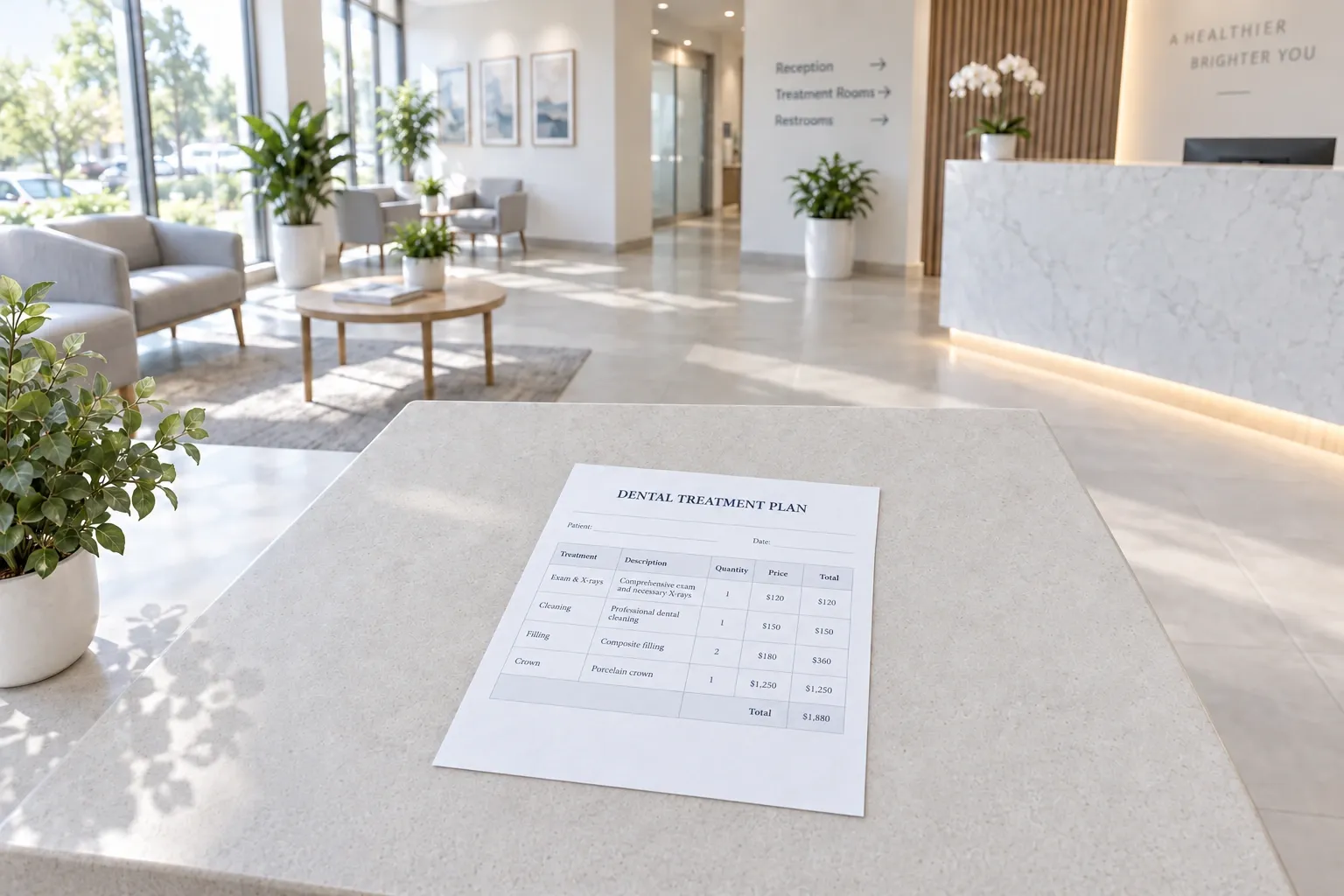
Digital vs paper treatment plans: why explaining isn’t enough
The plan gets decided at a kitchen table, not in your chair
The exam runs long and you explain everything properly. The patient nods, asks two good questions, and leaves with a printed sheet of codes and prices, or with nothing written down at all. The decision happens later, at a kitchen table, with a partner who wants to know what it costs and whether it can wait.
By then most of what you said is gone. Whatever the patient is holding at that point does the explaining for you: a memory of the conversation, a sheet of jargon, or a digital treatment plan they can open on a phone. That format matters more than how well you explained things in the room, and the evidence on format points one way.
Almost nothing survives the trip home
Patients forget most of what they hear in a clinical setting, and they forget it fast. A review in the Journal of the Royal Society of Medicine puts the loss at 40 to 80 percent of what was said, and nearly half of what patients do retain, they remember wrong.
That is before anxiety, the smell of disinfectant and a large bill enter the picture. None of this is a criticism of how you talk to patients. Nobody absorbs a plan well in that chair. So the thing the patient carries out of the room has to do the real work, because the conversation mostly evaporates.
Most patients would rather not have paper
A UK hospital study compared printed and digital patient information. 76 percent of working-age patients preferred digital, and 80 percent said it was easier to save and find again. Only 62 percent read the printed leaflet at all. A printout is something most patients glance at once, and a good share never open.
None of that should surprise you. It is 2026, and your patients already run their work, their banking and their calendar from a phone or a laptop. A sheet of paper is the one thing in their day they cannot search, save or forward.
The preference is not universal. Some patients, especially older ones, still want paper, and a clinic that serves many of them should keep it on hand. But the patients funding implants, orthodontics and cosmetic work are mostly of working age, and they expect to receive a plan the way they receive everything else. On a screen, saved, easy to forward.
Forwarding is the part that gets underestimated. Large cases are rarely decided alone. A digital plan can be opened again at the kitchen table and sent to the person who shares the budget. A folded printout in a coat pocket cannot.
Showing beats telling
The other thing paper cannot do is show. A 2025 systematic review in Frontiers in Digital Health found that video and animation improved patient knowledge in about 80 percent of the trials it covered, compared with text or speech alone.
Dentistry has its own evidence. When patients see their own mouth, the abstract becomes concrete. In one survey, 92 percent of patients said an intraoral camera helped them understand their dentist. The problem stops being something you assert and becomes something they can see. We will write more about intraoral cameras and their effect on patient decisions in a separate post.
A plan that carries that evidence, the annotated photo, the scan, the before and after, keeps explaining after the patient has left. A list of codes does not.
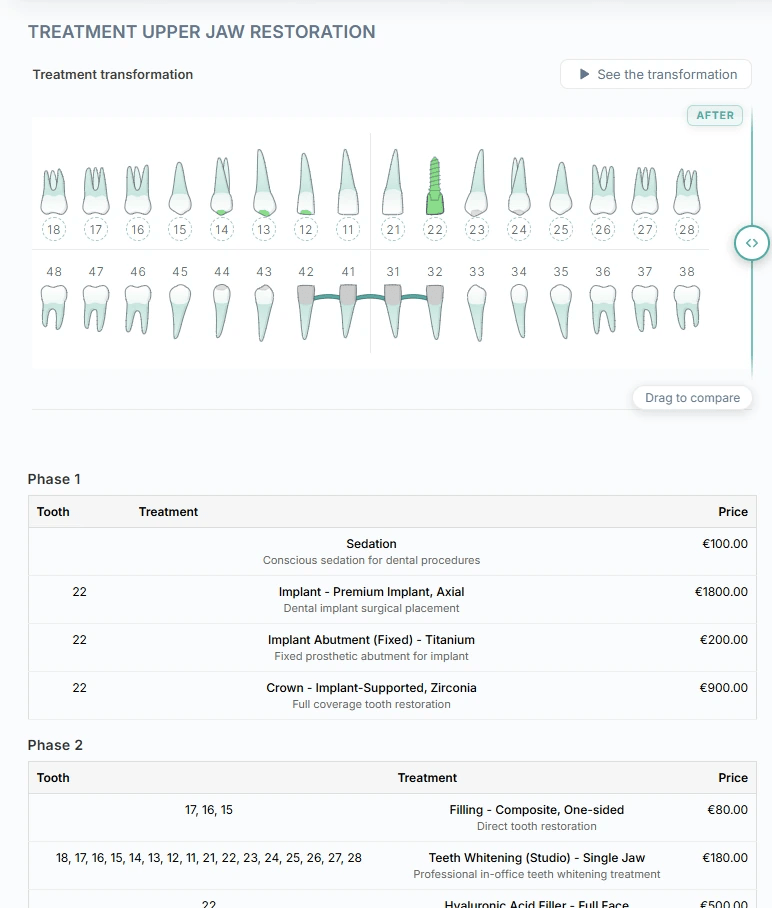
What the patient opens is their own mouth, before and after. The chart plays the transformation from where things stand today to how the finished work will look, and they can drag between the two and sit with the comparison as long as they want. Below it is the work that gets them there, phase by phase, with every procedure and its price named. Nothing is hidden behind a single total and nothing needs decoding. The sedation, the implant, the abutment and the crown each sit in the phase they belong to. Seeing the result first, and what it takes to get there second, is a different conversation from reading a list of codes and a total.
That order is doing the work. A patient who has watched their own teeth change has a reason to read the procedures underneath, and each price reads as the cost of part of a result rather than a line on a bill. The figures have not moved. What they are attached to has.
A digital treatment plan changes the decision, not just the memory
When a patient declines treatment, the reason they give is usually money. The reason underneath is often that they never understood why the work mattered. Painless early decay does not feel urgent, and if the plan leads with a total and buries the reasoning, any fee looks like too much.
Industry benchmarking puts average case acceptance around 45 percent, with top practices at 75 percent or higher.
Patients also judge the clinic by the document. People now measure every service against the best app on their phone, and a sheet of codes does not read as traditional. It reads as a clinic that has not caught up, and that impression attaches to the dentistry too.
Where this leaves the plan
If your case acceptance lags the quality of your work, look at what the patient is holding when they decide before you look at your chairside explanation. A memory fades. A printout goes unread. A clear, visual plan they can reopen and share does the communicating you cannot be there to do.
The exam itself is not what is being replaced. The live conversation is still where trust is built, where the patient sees the crack on the monitor and asks the question they were unsure about. A well-built digital plan supplements that conversation rather than standing in for it. On a routine filling the format barely matters. On the hard decisions, the implant or the full-arch case that costs real money and can always wait another year, the plan is often what nudges a patient from postponing to booking, because it keeps making your case after you have stopped talking.
At Plandentic, we built around that document. The clinical plan becomes a visual plan the patient opens on a phone, with all the information, the pros and cons, and the visuals they need, and they can save it and send it to whoever helps them decide. That is the format patients have already told us they prefer.